CFS Software
cfs.software@gmx.de
Phone +49 2484 9199360
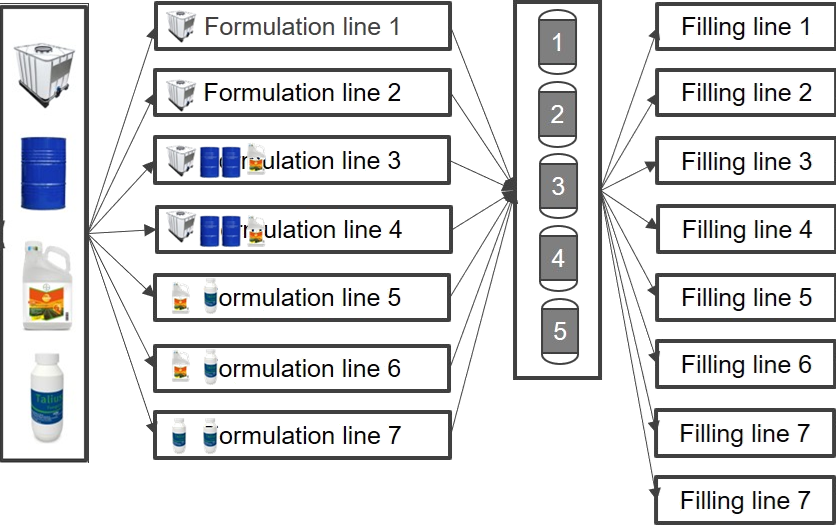 Production planning (RCPSP)
Production planning of batch processes
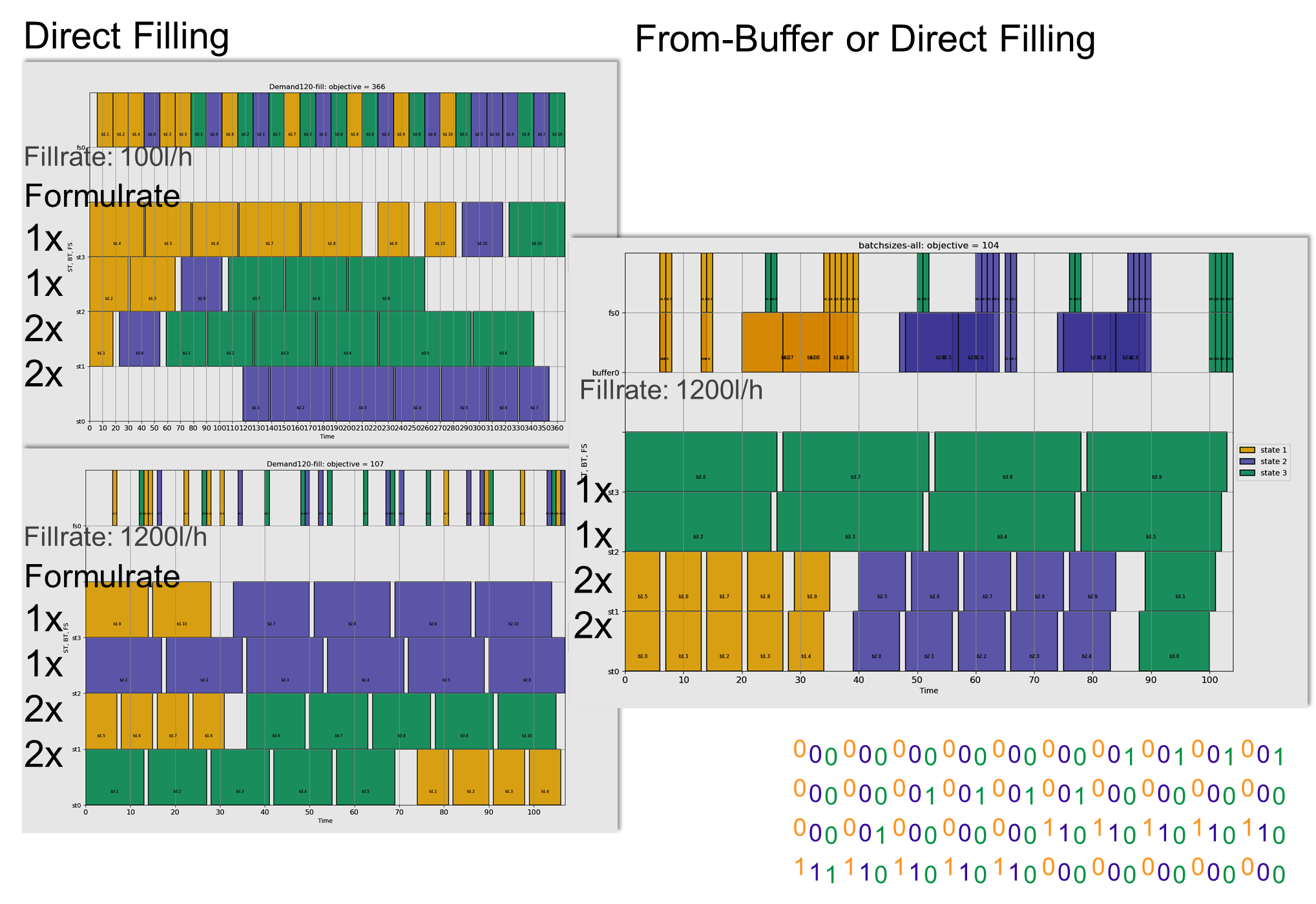
is a combination of batch assignment and machine scheduling.
It is possible to solve this problem with various algorithms
including constraint programming (CP), MILP and heuristics.
We implemented and evaluated different model variants for the assignment part.
While portfolio-based solvers are promising (OR-Tools CP-SAT),
their solving time is complex and depends on various factors.
 Functional Programming in Python for Big Data (PySpark)
PySpark is a way for big data processing in a customizable workflow. Throughput very much depends on caching mechanisms
and the proximty of data to compute nodes. This can be achieved by distributed file systems and data transfers adapted to
computation.
Solutions, like for example inverted-indexes from PDF documents, can be deployed to on-premise clusters and cloud clusters.
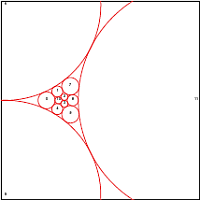 Geometric Constraint Solver using Bernstein Polynomials
Using linear program relaxation, it is possible to compute solution bounds
for multi-variate polynomial (in-)equalities. The approach is an iterative search, complete in terms of solutions.
The Bernstein-Bézier form is used for a tight convex enclosure of the polynomial variety.
The number and the computational complexity for finding its coefficients (from the given monomial coefficients)
are essential for this method.
Bernstein-Bézier techniques and interval arithmetic provide valuable tools for this method.
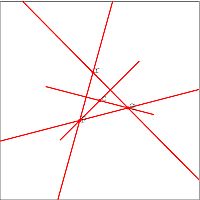 Analysis and Decomposition using Solution Witnesses
Geometric constraint systems behave similarly in the parameter neighborhood of a generic solution,
as known from rigidity theory.
But geometric constraint systems can also exhibit degeneracies due to incidences of geometric entities
(for example, point-on-line, circle-touching-line).
The witness method is used to analyze systems with different types of constraints in a solution point, called a witness.
We compute typical, non-degenerate witnesses, classify the system branch as under-/well-/over-constrained,
and give an algorithm for decomposition into well-constrained parts.
(c) 2008-2026. Christoph Fünfzig, Mechernich, cfs.software@gmx.de
Despite a thorough review of linked documents,
we do not assume liability for their contents. The operator
of the linked document is exclusively responsible for its contents.
|
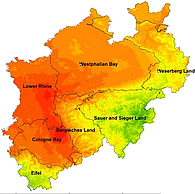 Weather NRW 2009-2018 Visualization (Plotly Dash, served by Gunicorn)